Stories from the Road – Augusta Food Bank
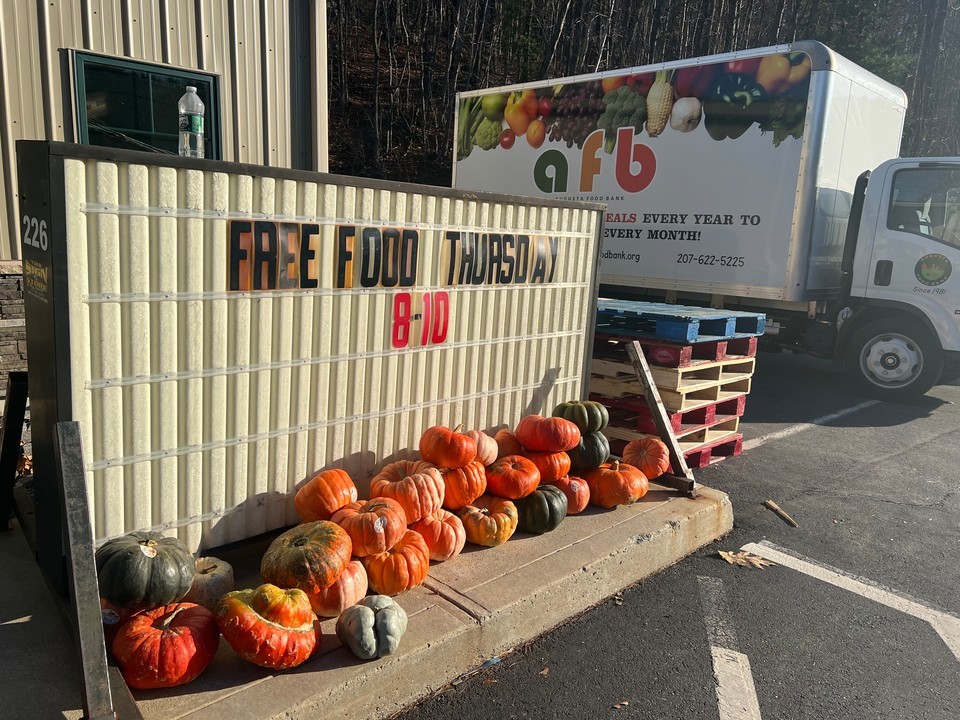
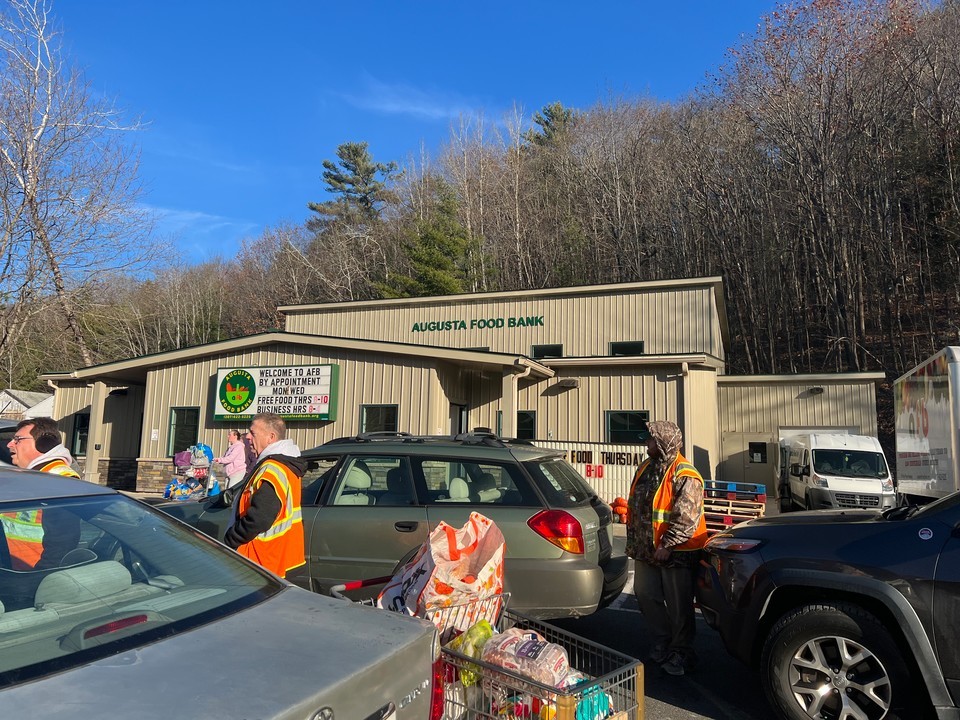
On a cold November evening in Augusta, Maine, headlights begin to flicker into the parking lot long before the Augusta Food Bank opens for Free Food Thursday. One car pulls in just after sunset on Wednesday night. Another arrives closer to midnight. A man settles in to sleep in his vehicle, wrapped in a blanket. Nearby, another neighbor—who is unhoused—spends the night in his tent so he won’t lose his place in line. By morning, the lot will be full, and a line of cars will be stretching down the street.
The Augusta Food Bank (AFB) has been seeing an increase in need, spiking during a period of uncertainty tied to a federal government shutdown and the resulting threats to SNAP benefits. For several weeks this fall, neighbors who rely on SNAP worried their benefits would be suspended or arrive late. “There are more people coming through our doors than ever before,” said Bob Moore, AFB’s executive director. In the first weeks of the disruption, the food bank served 102 cars on Free Food Thursday. Well above the typical average of 85 households.
The Augusta Food Bank has been part of the community since 1981. A Partner Agency of United Way of Kennebec Valley, it is governed by a volunteer board made up of community members and representatives from participating congregations. What began as a small, supplemental food source has grown into a central place of support for Kennebec County, now serving an average of 350 households onsite each month. Neighbors can visit once a month and receive about a week’s worth of food, adjusted for family size.
Beyond the pantry walls, AFB’s reach extends even further. Through its Food Share program, AFB helps distribute food to additional people at locations throughout the region. In total, they partner with 35 organizations. This includes other pantries, groups, and community programs—ensuring food reaches people where they already are.
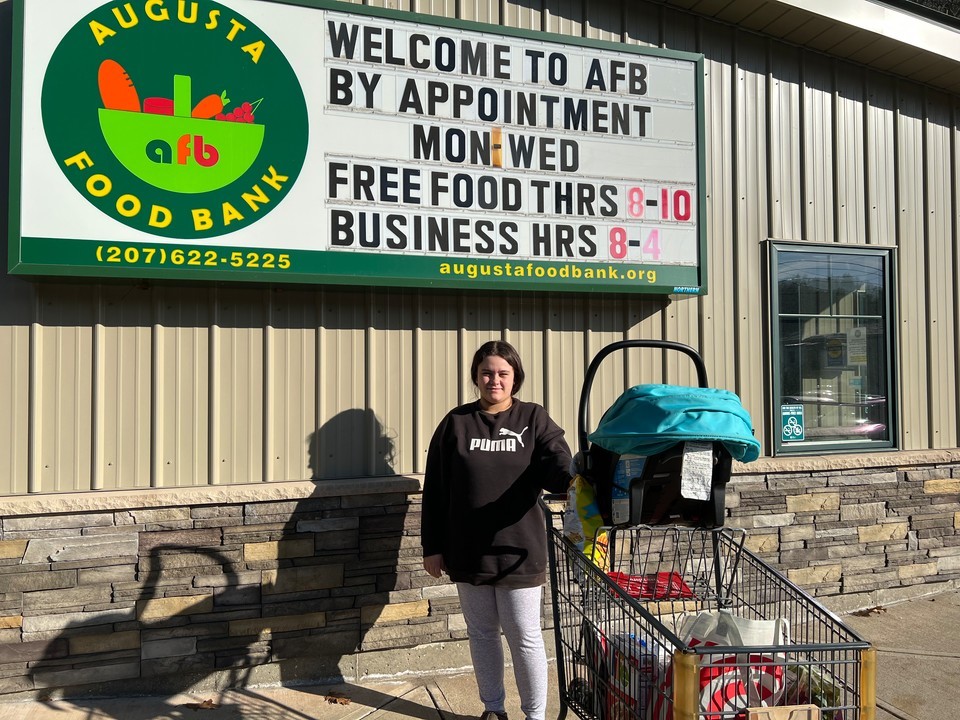
In addition to Free Food Thursday, the Augusta Food Bank offers several ways for neighbors to access food throughout the week. On-site food pickup appointments are available Monday through Wednesday for eligible Augusta and Manchester residents. On Thursday mornings, all neighbors are welcome; regardless of income level or place of residence and no appointment is necessary.
AFB also supports children and families through its KidsPak program, providing a bag of shelf-stable, kid-friendly foods to every school-aged child in the Augusta area throughout the year. An average of 350 KidsPaks are distributed each month.
For neighbors who are homebound due to medical conditions or physical limitations, AFB offers a monthly home delivery program, reaching an average of 30 individuals each month. Making sure food remains accessible even when leaving home is not.
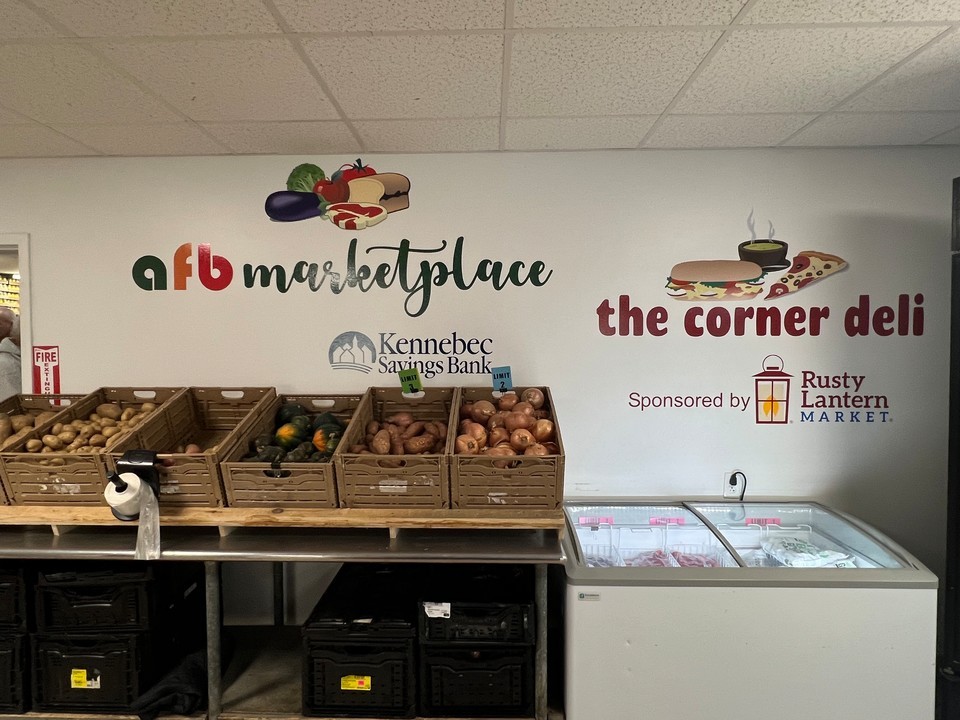
One word to describe the inside of AFB is, comfortable. Both the space and the people within it. Designed as a shopping-model pantry, neighbors can move through the shelves and select the foods that best meet their needs and preferences. Volunteers are always close by, offering guidance, answering questions, and greeting familiar faces with warm smiles. For many who return week after week, Thursdays have a rhythm. One built on welcome, choice, dignity, and a sense of ease.
Neighbors arrive at the pantry from many different backgrounds and lived experiences. They include families, older Mainers, people who have lost jobs, immigrants, and individuals experiencing homelessness. With Togus VA Medical Center local to Augusta and several mental health organizations nearby, many guests are navigating complex challenges alongside food insecurity. Some people travel from as far as Appleton to Cumberland on Free Food Thursday, where they can receive groceries worth $150–$200. The most requested items are food staples like butter and oil, as well as fresh produce, which are often the hardest to afford. Many of these neighbors are juggling tight budgets to cover medical expenses, as well as heating and cooling costs, making it even more difficult to stretch their funds for groceries.
Iceiss is one of the newest faces at the pantry. A new mother who recently relocated to the area, she came in this week with her one-week-old baby bundled close to her chest. Although she lives nearby, she doesn’t have a stroller, and with the cold Maine winter, she chose to drive to the pantry. With grocery prices rising and SNAP benefits in flux, she says the pantry has been a lifeline. “Especially with the way prices are—it’s crazy,” she shared. “Then we had the whole SNAP thing. It was chaos for three weeks.” Growing up, her family relied on food banks, too. “If you need food, why not? There’s food. Everyone should have it.” For Iceiss, the pantry represents something simple and necessary: access, without judgment.
Much of the food that is distributed comes through partnerships. Working with Good Shepherd Food Bank, the Augusta Food Bank receives retail donations from local supermarkets, including Hannaford Supermarkets, Sam’s Club, Walmart, and Target. Those relationships help keep shelves stocked with meats, eggs, dairy, bread, and more. When needed, some food is purchased locally to fill the gaps.
Behind every distribution day is a team of volunteers who keep things moving. Each arrives with their own reason for showing up. Bernadette is one of them. Retired from state service and formerly a massage therapist, she began volunteering this summer after retiring. Like many others, she brings not only her time, but a steady presence. In turn, helping neighbors feel at ease in what can be a difficult moment.
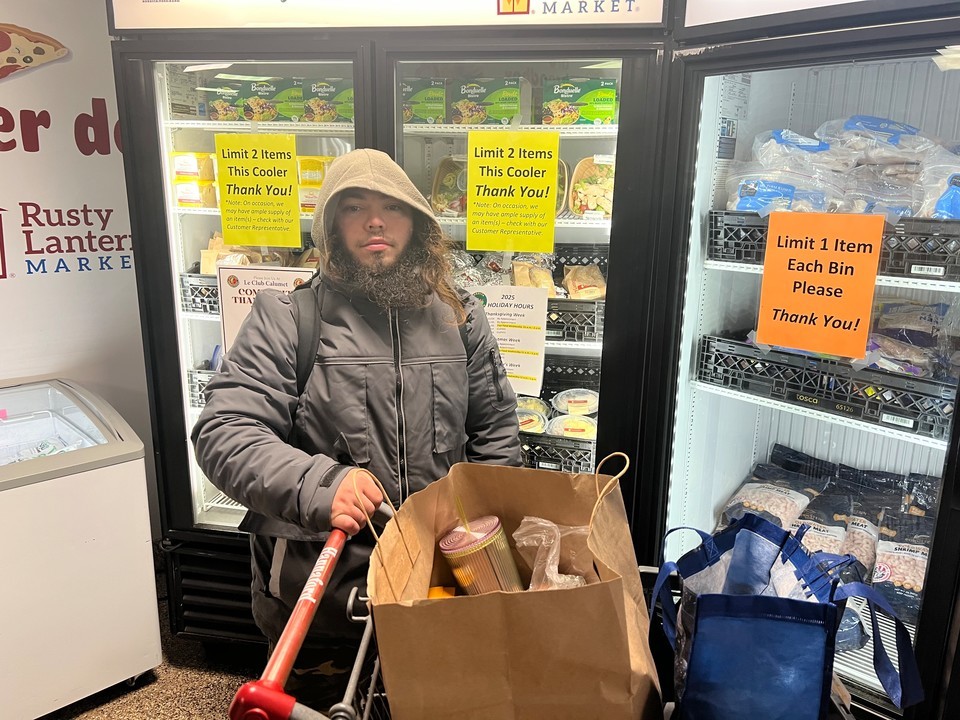
For neighbors, the pantry is about more than food. Nephi, whose name means “goodly” or “fair,” comes through the LINC program for individuals who are unhoused. A lifelong Augusta resident, Nephi often surprises people with his background, his roots, and his story. Much of Nephi’s time is spent cooking; not just for himself, but for others experiencing homelessness at the LINC Center. “People say they like my cooking,” he shared with a smile. Access to ingredients, however, can be unpredictable. Cooking staples like oil are often hard to come by, forcing him to improvise. “Sometimes there’s no oil,” he said, “so I’ll use peanut butter like peanut oil just to get food cooked.”
When Nephi comes to the pantry, he gathers what he can, not only for himself, but to share. Life on the streets, he says, is “feast or famine.” When there’s plenty, you share. When there’s nothing, you hope someone else does the same for you. For Nephi, the pantry represents community and mutual care; people helping one another survive, one meal at a time.
Debbie shops alongside her husband and contributes $15 when she’s able. Carl comes alone now. He and his wife Claire used to plan their pantry visits around her dialysis schedule. She loved cooking—bacon-wrapped scallops were a favorite. Claire passed away six months ago, and Carl still tears up when he talks about her. Coming to the pantry, he says, takes some of the sting out of the loss.
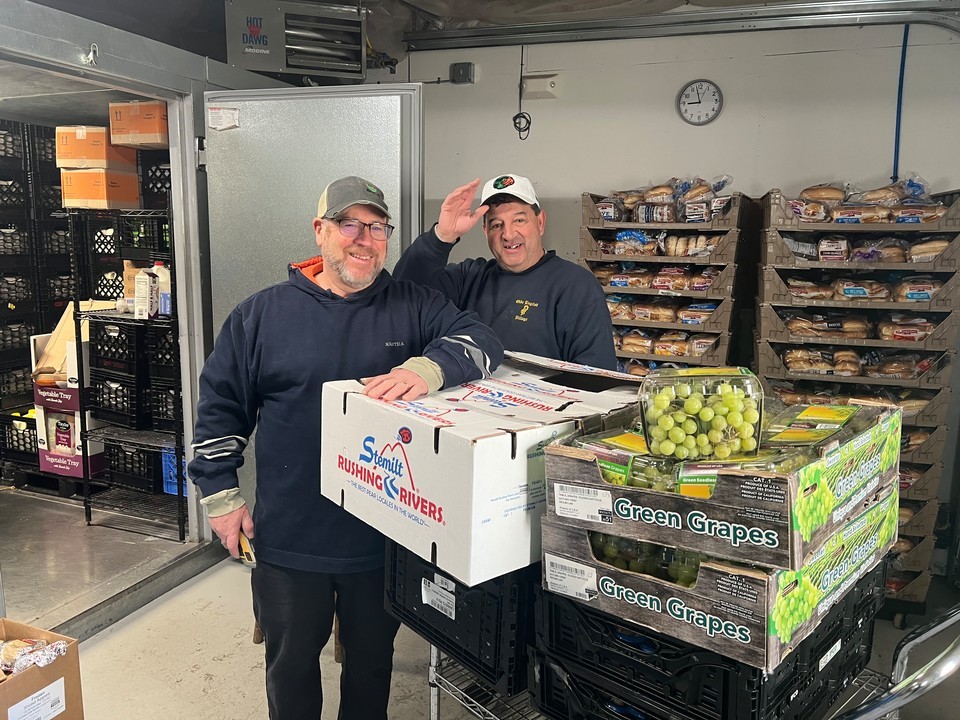



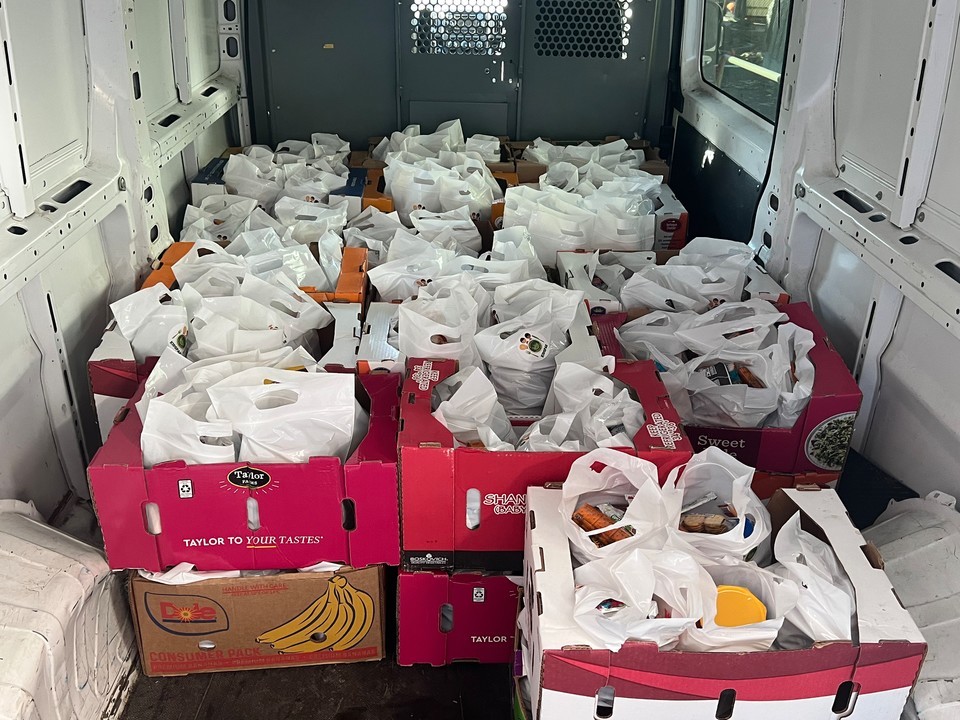

This year alone, the Augusta Food Bank has distributed 1.5 million pounds of food, equivalent to $2.7 million. But those numbers only tell part of the story. The rest is found in the quiet hours before dawn, the conversations at the check-in table, and the relief that comes with a full trunk and a little less worry for the week ahead.
At the Augusta Food Bank, the response to rising need is steady and compassionate. As SNAP and Medicaid changes and other economic pressures continue to ripple through the community, the food bank remains a place people can count on.
Good Shepherd Food Bank works in partnership with nearly 600 hunger-relief organizations, located from Kittery to Fort Kent, to help distribute food to community members in need. Our network of partners includes food pantries, meal sites, senior centers, schools, and healthcare partners.