The Farm Bill
Connecting Agriculture, Nutrition, and Hunger-Relief
The Farm Bill shapes America’s food system every five years, influencing everything from nutrition assistance and farming to conservation and rural communities. It is one of the most influential pieces of legislation in our work to end hunger in Maine.
What is the Farm Bill?
The Farm Bill is a comprehensive federal law that authorizes funding and policy for agriculture, nutrition, conservation, rural development, and food systems. It’s what’s known as omnibus legislation, a big, multipart bill that bundles together dozens of programs and policies under one roof.
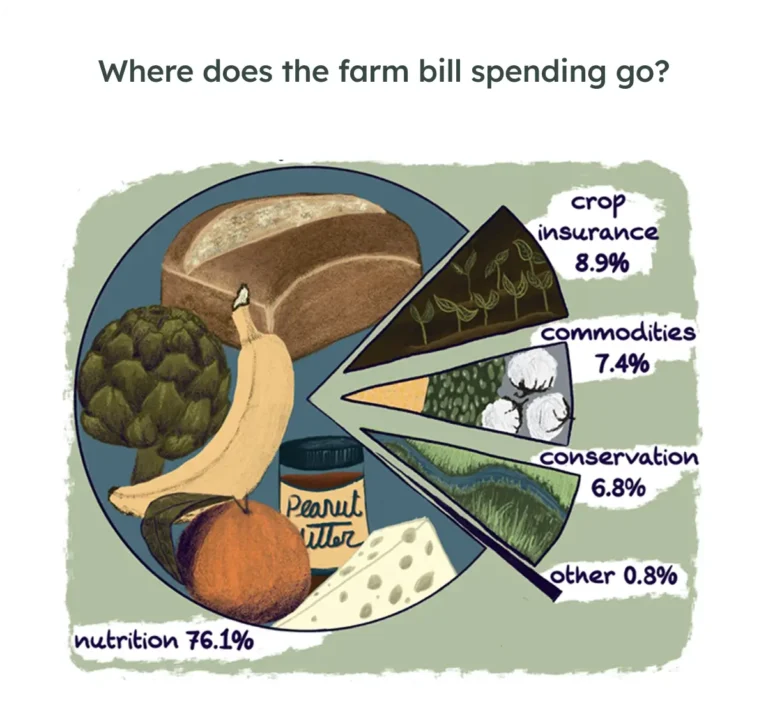
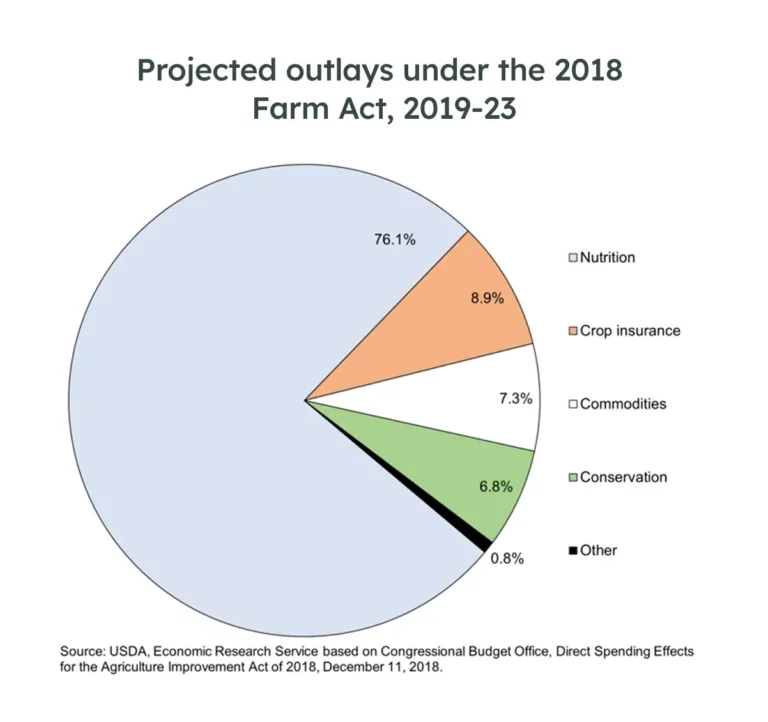
While many people think of it as farm policy, nutrition programs make up the largest share of Farm Bill funding, including SNAP. Congress has enacted 18 Farm Bills since 1933, typically reauthorizing the legislation every five years.
A Brief History
Today, the Farm Bill touches nearly every part of the food system, from the fields where crops are grown to the tables where families eat.
Where Farm Bill Funding Goes
Nutrition programs make up the largest share of Farm Bill spending by far — about 76% under the most recent enacted bill — with the remainder split across crop insurance, conservation, commodities, and other programs. That means every time Congress debates the Farm Bill, they’re making decisions that directly shape food access for families right here in Maine.