Volunteer Spotlight: Making a Difference, One Box at a Time
A Passion for Health, Wellness, and Helping Others
For Deb Werts, retirement didn’t mean slowing down. It meant having more time for the things that matter.
After a career in Occupational Health and Safety Nursing, including most recently serving as an Employee Health Nurse at Martin’s Point in Portland, Deb retired and, about a year and a half ago, moved from Auburn to Scarborough with her husband, Wayne. As they settled into their new community, Deb found herself with something she hadn’t had quite as much of before: time. And she knew exactly how she wanted to spend some of it.
She wanted to give back.
Deb had volunteered with Good Shepherd Food Bank on and off for several years, but retirement gave her the opportunity to become a more regular part of the Food Bank volunteer community. It didn’t take long for her to realize that the mission was a natural fit.
“Food is essential for health/wellness, and I really like the Good Shepherd Food Bank mission and philosophy,” Deb says.
With a background rooted in health and wellness, Deb understands just how important access to nutritious food can be. But for her, volunteering at Good Shepherd Food Bank is about more than sorting, inspecting, and boxing food. It’s about knowing that the work she does can make a difficult time a little easier for someone else.
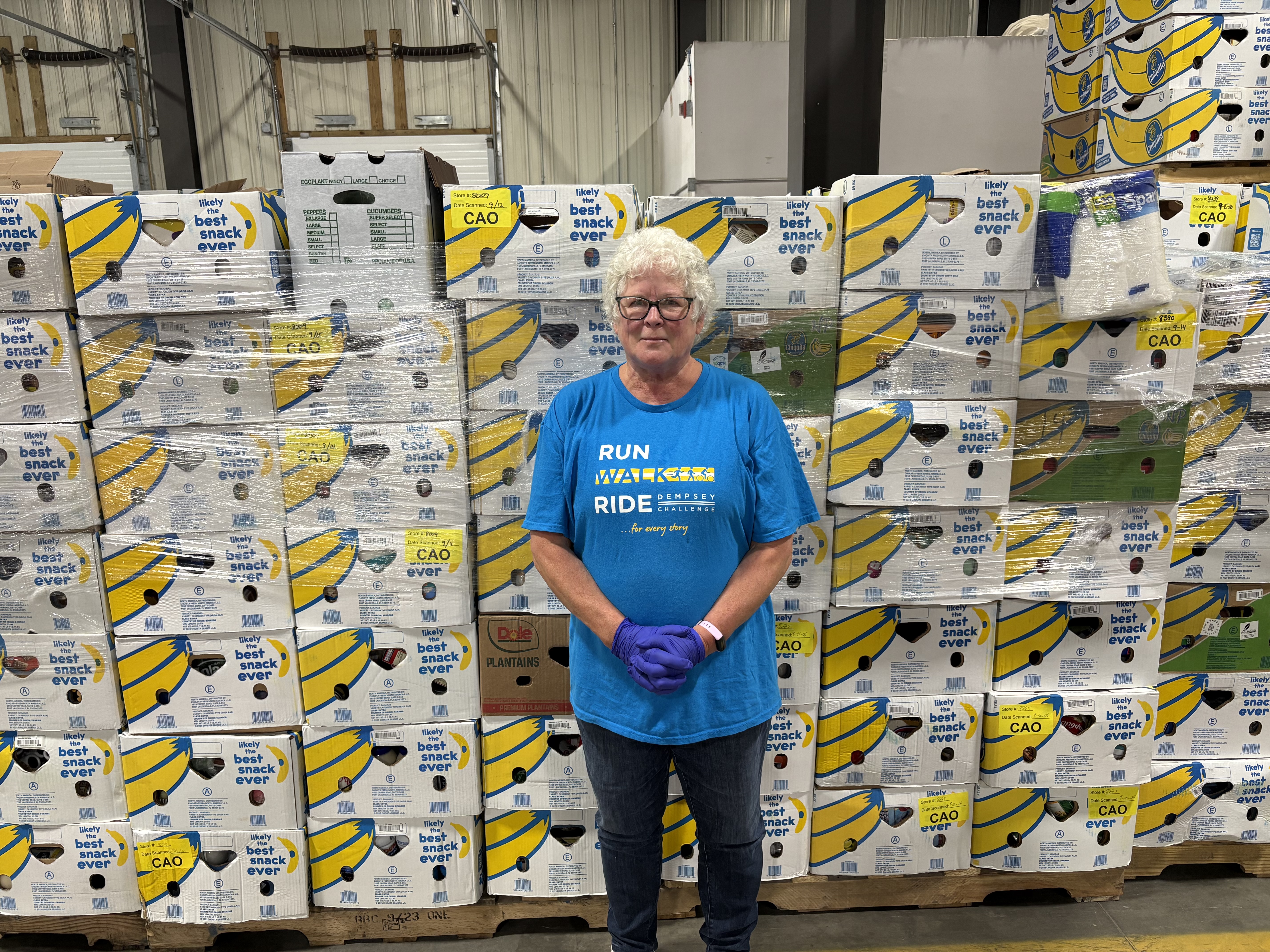
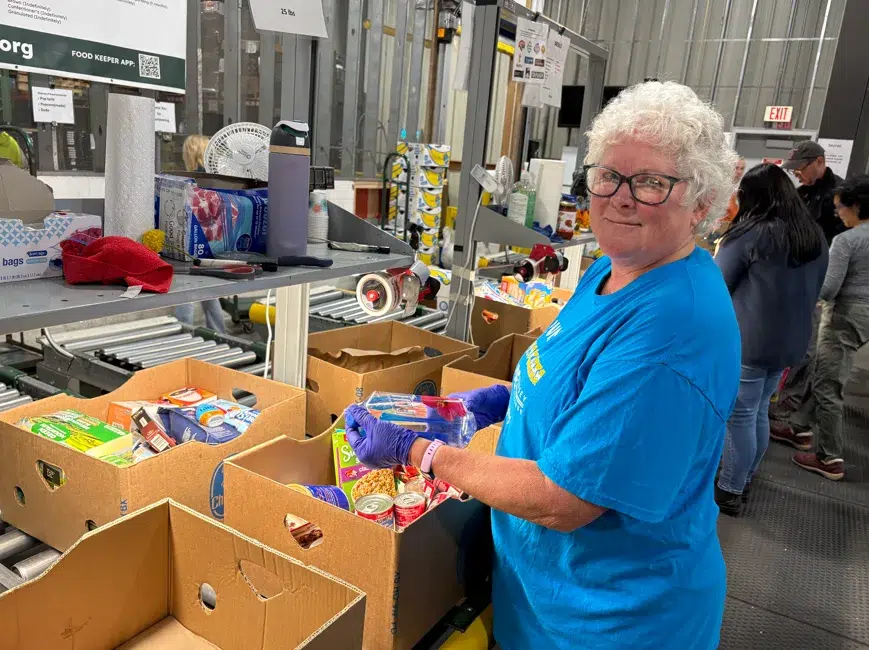
A Few Hours Can Make a Difference
Ask Deb why she keeps coming back, and her answer is simple.“ Food insecurity is just wrong for anyone,” she says. She also appreciates the way Good Shepherd Food Bank works with businesses and community partners to make sure good food gets where it is needed rather than going to waste. As a volunteer, Deb gets to be one small part of that process. “So, if I can sort, inspect and box this food so those in need can get it, maybe I helped others through some challenges.”
That perspective is at the heart of what volunteering means to Deb. She may spend just a few hours at the Food Bank, but she knows those hours can have an impact long after she heads home. And, of course, there are the people she gets to work alongside. “Claire and Sharon are great to work with and tolerate my many questions!”
Her willingness to ask questions is part of what makes volunteering a learning experience, too. There’s plenty to learn when you first walk through the doors, and Deb knows that getting comfortable takes time.
Thinking about becoming a volunteer? Start Small, Give It a Try
For anyone who has thought about volunteering but hasn’t quite taken the first step, Deb has some straightforward advice: “Give it a try!” But she also recommends giving yourself time to find your rhythm. “I’ve worked my way up to volunteering both morning and afternoon shifts on the same day, but this happened over a few months,” she explains. “Choose a few one-hour shifts at the start to see what it’s all about.”
Her advice comes from experience. Volunteering can feel like a lot at first, especially when there’s a new process to learn and new people to meet. “Don’t get discouraged. There’s a lot to it, but it all works out.” And once you get into the routine, Deb says, there are benefits that go beyond knowing you’ve helped your community. “It does offer some physical activity as well as keeping your mind sharp,” she says. For Deb, it’s a pretty good combination: stay active, keep learning, meet people, and help make sure food reaches the people who need it.
The Perfect Post-Volunteer Snack
Of course, every good volunteer knows that hard work calls for a good snack. After a morning or afternoon spent sorting, inspecting, and boxing food, Deb’s go-to choice is something with protein, usually cheese and crackers, along with an apple or another piece of fruit. A simple, satisfying way to refuel after a few hours of giving back.
A Positive Attitude Goes a Long Way
When asked whether she has a favorite quote or saying, Deb couldn’t narrow it down to just one. Instead, she shared two:
“What goes around comes around, whether good or not so good.” And: “Being a good person with a positive attitude makes life so much easier.”
Both sayings seem to capture the approach Deb brings with her when she volunteers: show up, do what you can, treat people well, and keep a positive attitude. It’s a philosophy that extends beyond the Food Bank and into everyday life.
Looking Toward a Hunger-Free Maine
When Deb thinks about the future of ending hunger in Maine, she sees the answer in people working together. “I think a combination of efforts by an increasing number of people will make that happen.” She imagines communities where food pantries have the resources they need to support their most vulnerable neighbors, paired with practical opportunities for people to build skills around growing and preparing food. “Assuring that food pantries can take care of their most vulnerable, along with simple gardening and cooking classes for all might get us to a good place.”
Her vision reflects something important about the work of ending hunger: it takes all of us. It takes food donors and community partners. It takes advocates, volunteers, and people willing to share their time and talents. And it takes individuals like Deb, who recognize that even a few hours can be part of something much bigger. For Deb, making a difference doesn’t require a grand gesture.
Sometimes, it looks like showing up for a shift, asking a few questions, sorting a box of food, and knowing that somewhere down the line, that box may help a neighbor through a difficult day. Sometimes, making a difference is as simple as giving an hour of your time.